Waterjet cutting is becoming the common approach in the aerospace industry, and for good reason. From complex engine parts to lightweight drone components, aerospace materials demand extreme precision and care. Traditional cutting methods like laser or plasma generate heat, which can damage or distort sensitive materials. But with waterjet cutting, there's no heat involved—making it a safer, cleaner, and more accurate option for advanced aerospace parts.
Let’s take a deep dive into how Waterjet Cutting Machines and Waterjet Technology are reshaping the aerospace industry, from their process to their wide range of applications.
What Is Waterjet Cutting?
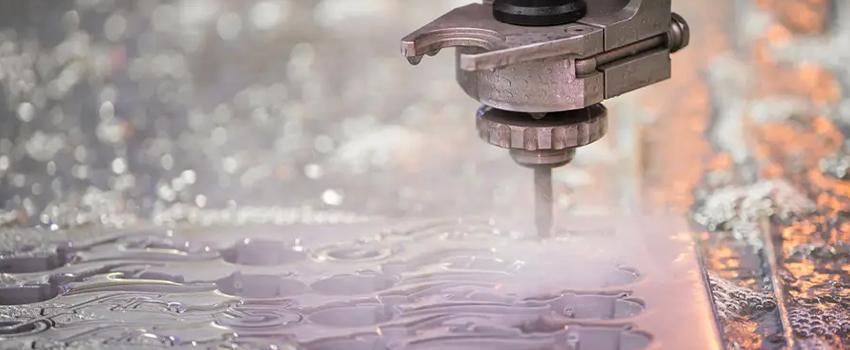
Waterjet Cutting is a material-cutting process that uses a high-pressure stream of water, often combined with an abrasive substance like garnet, to cut through various materials. The technique is renowned for its ability to make precise cuts without generating heat, making it a standout solution for temperature-sensitive aerospace materials.
Unlike other machining methods, Waterjet Cutting Machines do not create a heat-affected zone (HAZ). This cold cutting process ensures the structural and chemical integrity of the material remains unchanged—a crucial requirement in aerospace engineering.
Process of Waterjet Cutting in the Aerospace Industry
In aerospace applications, the Waterjet Cutting process follows a meticulous sequence designed to produce high-quality results with absolute precision:
Step 1: Designing with CAD
Aerospace parts are typically designed using Computer-Aided Design (CAD) software. These digital models are loaded into a Waterjet Cutting System, where the cutting path is programmed down to the finest detail.
Step 2: Material Setup
Materials such as aluminum, titanium, carbon composites, or Kevlar are placed on the cutting bed. Due to the non-contact nature of the cut, fixturing is minimal, reducing setup time.
Step 3: Cutting Using High-Pressure Water
Water is pressurized up to 60,000–90,000 psi and forced through a small nozzle, generating a highly focused stream. For harder materials, abrasive particles are added to the stream. The resulting power is strong enough to cut through 6-inch-thick titanium with exceptional precision.
Step 4: Final Finishing
Once the cut is complete, parts often require little to no secondary finishing. This saves both time and resources, helping manufacturers stick to tight aerospace project deadlines.
Because of these highly controlled operations, Waterjet Cutting Machines are increasingly found in aerospace workshops and OEM facilities worldwide.
Benefits of Waterjet Cutting in the Aerospace Industry
The aerospace sector stands to gain immensely from Waterjet Solutions, thanks to the process’s many technical advantages:
1. No Heat-Affected Zones
One of the biggest advantages of Waterjet Cutting in aerospace applications is the complete elimination of heat-affected zones (HAZ). In traditional cutting processes like laser or plasma, high temperatures can alter the microstructure of metals, leading to warping, stress fractures, or even chemical changes. These changes compromise the strength and reliability of aerospace components—something that’s simply not acceptable in critical environments like aircraft engines or control systems. Waterjet Cutting, as a cold cutting process, uses pressurized water (sometimes mixed with abrasive particles) to slice through materials without generating heat. This keeps the material’s structural integrity intact, ensuring consistent performance under high stress and varying temperatures. The absence of thermal distortion also removes the need for post-processing, saving time and cost.
2. Extremely High Precision
Aerospace manufacturing demands a level of precision that few technologies can consistently deliver—but Waterjet Machines stand out. With cutting tolerances that can reach as tight as ±0.1 mm, these systems are engineered for accuracy. This level of precision is vital when creating complex aerospace components like turbine blades, control surfaces, and custom brackets, where even the slightest dimensional error can lead to failure. The Waterjet Cutting Machine achieves this accuracy without edge burns, warps, or tool deflection. Moreover, the fine control of cutting paths allows engineers to implement intricate design features and geometries with confidence. Whether it’s a single prototype or high-volume production, the repeatability of Waterjet Technology ensures each part is identical to the design spec.
3. Wide Material Compatibility
Aerospace components are manufactured from a wide range of specialized materials—lightweight metals like aluminum and titanium, high-strength steels, carbon fiber composites, and even exotic alloys like Inconel or Hastelloy. Many of these materials are notoriously difficult to machine using conventional cutting techniques. Fortunately, Waterjet Cutting Systems are designed to handle this diversity effortlessly. The waterjet stream doesn’t discriminate—it cuts virtually any material without causing heat-related issues or mechanical stress. This makes it ideal for fabricating multi-material components used in modern aircraft. Engineers can transition from one material type to another with minimal machine setup, which increases productivity and reduces downtime in aerospace production environments.
4. Environmentally Friendly
Sustainability has become a major focus across industries—including aerospace—and Waterjet Cutting stands out as one of the most eco-conscious fabrication methods available. Unlike plasma or laser cutters, waterjet machines do not release toxic fumes, harmful gases, or metal dust into the atmosphere. This leads to safer working environments and a reduced carbon footprint. Even better, the water used during cutting can be filtered and recycled, reducing water consumption over time. The abrasive materials used—typically garnet—are also non-toxic and can be disposed of responsibly. As aerospace manufacturers work to meet strict environmental standards and adopt greener technologies, Waterjet Cutting Technology aligns perfectly with these goals without compromising performance or quality.
5. Minimal Waste
Material efficiency is crucial in aerospace manufacturing where every sheet of titanium or aluminum alloy represents a significant investment. Waterjet Cutting Machines excel in nesting parts tightly on a single sheet, ensuring maximum material utilization. The precision of the cutting process also means there is less margin for error—so fewer parts need to be scrapped due to incorrect dimensions or burns. This minimal waste approach not only helps reduce overall material costs but also supports sustainability initiatives by minimizing scrap. Especially when dealing with limited or costly aerospace-grade materials, every saved inch counts. Manufacturers can produce more parts from the same stock, enhancing both economic and environmental outcomes.
6. Cost-Efficient Prototyping
In the aerospace industry, prototyping is a critical phase—used to test new designs, validate functionality, and make rapid improvements before moving into production. However, traditional prototyping methods can be expensive and time-consuming due to the need for custom tooling, dies, or molds. Waterjet Cutting Services eliminate these barriers. Since the process is CNC-controlled and doesn't require special tools for each design, it’s possible to go directly from CAD file to finished part in a fraction of the time. This agility is especially valuable for small-batch production, R&D, or limited-run custom components. With Waterjet Cutting, aerospace engineers and designers can bring ideas to life faster—and more affordably—while maintaining the high precision their projects demand.
Use of Waterjet Cutting in Aerospace Manufacturing
Fuselage Panels
Large fuselage panels made from aluminum and composite materials are trimmed to size using Waterjet Cutting Machines. The process ensures clean edges and smooth contours without any burrs.
Turbine Components
Turbine blades made from heat-resistant alloys demand extreme precision. Waterjet Systems offer the accuracy required while preserving the strength of the base material.
Rocket Parts
Even in the space sector, Water Jet Applications are gaining popularity. Complex parts used in satellites and rockets are often made using Waterjet Cutting for its ability to cut exotic metals and ceramics.
Internal Aircraft Components
Brackets, housings, and mounts made from lightweight metals are produced quickly and efficiently using Waterjet Cutting Services. It’s perfect for both batch production and custom orders.
Seals and Gaskets
Soft materials like rubber and silicone are commonly used in aerospace gaskets. A pure water jet cutting stream (without abrasives) is ideal for such applications due to its clean slicing and non-damaging nature.
Main Uses and Aerospace Materials Best Suited for Waterjet Cutting
1. Titanium – Engine Parts, Airframe Fasteners
Why Waterjet? Avoids hardening and thermal damage
Titanium is a favorite in the aerospace industry thanks to its incredible strength-to-weight ratio and corrosion resistance. It’s used extensively in engine components, brackets, and airframe fasteners where reliability under stress is critical. However, machining titanium can be a nightmare due to its tendency to harden during thermal cutting, which damages tools and affects material properties. Waterjet Cutting solves this issue by offering a cold cutting process that produces clean, accurate parts without introducing heat or altering the metal’s molecular structure. This ensures that the titanium remains stable and stress-free—exactly what’s needed for high-load, high-temperature environments.
2. Aluminum – Structural Panels, Interior Frames
Why Waterjet? Clean, burr-free cuts
Aluminum is widely used in aerospace for structural panels, support ribs, and interior frames because it’s lightweight and easy to work with. However, traditional cutting can leave burrs and heat marks, which require additional post-processing. Waterjet Cutting Machine offers a highly efficient and precise method for slicing through aluminum sheets and blocks with smooth, burr-free edges. The process avoids work hardening, minimizes scrap, and accelerates production—perfect for manufacturing high-precision parts that need to fit perfectly into larger airframe assemblies.
3. Carbon Fiber – Drone Arms, Aircraft Panels
Why Waterjet? Prevents delamination
Carbon fiber composites are a game-changer in aerospace engineering due to their exceptional strength and minimal weight. They're often found in aircraft panels, drone arms, wing components, and even satellites. But cutting carbon fiber is tricky—heat-based tools can cause delamination (where layers separate), compromising strength and aesthetics. Waterjet Technology sidesteps this entirely. Because it uses no heat, it slices through composite layers cleanly and uniformly, preserving structural integrity. It also avoids fraying or edge damage, making it ideal for precision components where finish and performance matter.
Inconel and Hastelloy are superalloys designed to perform under extreme temperatures and corrosive environments—exactly the conditions found in jet engines, exhaust systems, and combustion chambers. These alloys are extremely tough to machine using conventional methods due to their hardness and heat resistance. Waterjet Cutting Systems, however, are perfectly suited for these materials, offering unmatched cutting power without wearing out tools or introducing stress cracks. This makes it possible to fabricate complex shapes and critical engine components from these hard-to-cut metals with extreme accuracy and without compromising material performance.
5. Rubber & Gaskets – Seals and Dampeners
Why Waterjet? Precise cuts without fraying or distortion
Rubber, foam, and gasket materials are essential in aerospace for vibration dampening, sealing pressurized systems, and ensuring airtight cabins. These materials are soft, elastic, and often delicate—making them difficult to cut cleanly with mechanical tools. Waterjet Machines excel here too. They provide smooth, distortion-free cuts without crushing, fraying, or stretching the material. Intricate gasket shapes and multi-layer seals can be cut with pinpoint precision, helping aerospace engineers maintain tight tolerances and optimize performance across engines, fuel lines, and hydraulic systems
Conclusion
From jet engines to satellite components, the demand for precision and performance in the aerospace industry is greater than ever. Waterjet Cutting meets this demand with unmatched accuracy, flexibility, and reliability. Whether you are working with titanium, carbon fiber, or heat-resistant alloys, Waterjet Technology offers a superior alternative to thermal cutting methods.
As the aerospace sector continues to push the boundaries of innovation, the role of Waterjet Cutting Machines and Waterjet Solutions will only grow. For manufacturers looking for high-quality, eco-friendly, and efficient cutting methods, Water Jet Cutting Services are the clear choice.
FAQs
Waterjet Cutting stands out due to its ability to cut without heat. This means there are no heat-affected zones, making it ideal for precision aerospace components that must maintain exact material properties. Unlike laser or plasma cutting, Waterjet Technology preserves material strength and eliminates thermal distortion. This ensures high accuracy and safety for parts used in aircraft engines, airframes, and control systems.
A: Absolutely. High-pressure Waterjet Cutting Systems equipped with abrasive materials can easily slice through tough alloys like titanium and Inconel while maintaining perfect edge quality. These materials are difficult to machine with traditional methods, but Waterjet’s Cold Cutting Process ensures clean cuts without altering material structure. This makes it the preferred method for cutting aerospace-grade metals used in jet engines and structural parts.
Yes. Advanced Waterjet Cutting Services can integrate multi-head systems and automation, making them suitable for both large-scale and custom aerospace manufacturing. With modern CNC control and nesting software, manufacturers can maximize material usage and reduce waste. This scalability supports everything from rapid prototyping to full-scale production runs with consistent quality.
Modern Waterjet Machines can achieve incredibly tight tolerances (up to ±0.1 mm), perfect for turbine blades, aerodynamic parts, and bracket assemblies. Even intricate geometries and thin materials are cut precisely without deformation. This level of precision is essential for aerospace projects, where even small errors can affect performance, safety, and airworthiness compliance.
We provide innovative product solutions for sustainable progress. Our professional team works to increase productivity and cost effectiveness on the market.